Background
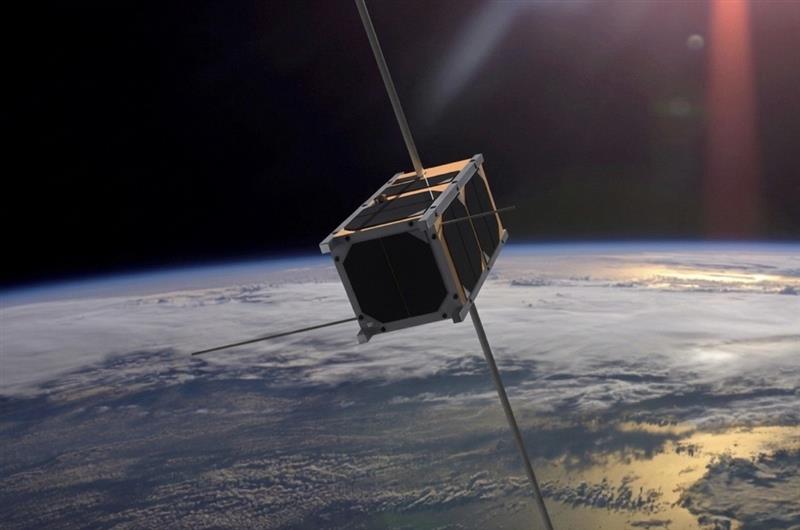
In recent years, space development by private companies and educational institutions has rapidly expanded. Ultra-small satellites known as CubeSats are widely used due to their low cost and short development time.
However, conventional propulsion systems have limitations. Chemical propulsion requires handling high-pressure gas and toxic fuel, while electric propulsion systems suffer from reduced efficiency when miniaturized.
This research focuses on Pulsed Plasma Thrusters (PPT), which are simple, compact, and use solid propellant (Teflon), making them safe and suitable for small satellites. By combining PPT with magnetic nozzles, this study aims to improve thrust performance and control.
Objective
The goal of this research is to actively control the thrust vector by using three magnetic coils. By adjusting the current of each coil, the magnetic field shape can be modified, allowing control of the plasma direction.
This enables satellite attitude control without using mechanical moving parts, reducing failure risk.
Principle
Pulsed Plasma Thruster (PPT)
A high-voltage pulse generates plasma from solid propellant. The plasma expands and is ejected, producing thrust through reaction force.
Magnetic Nozzle
A magnetic field generated by coils interacts with plasma, guiding its flow. This reduces energy loss and enables efficient acceleration.
Thrust Vector Control
By combining multiple magnetic fields, the plasma direction can be controlled, allowing thrust vector adjustment for satellite attitude control.
Method
A two-axis thrust stand is developed to measure both main and lateral thrust components. The system uses laser sensors to detect displacement and calculate thrust direction and magnitude.
In addition, 3D hybrid particle simulations are conducted to predict plasma behavior and optimize coil configurations.
Future Work
- Perform numerical simulations of plasma behavior
- Design and build a two-axis thrust measurement system
- Develop PPT with three magnetic coils
- Conduct vacuum experiments
- Compare simulation and experimental results
Conclusion
This research proposes a compact and reliable attitude control system using magnetic nozzles. It aims to contribute to the advancement of next-generation small satellite technologies.